 all_ph~ Annamaria La Mastra
Materials
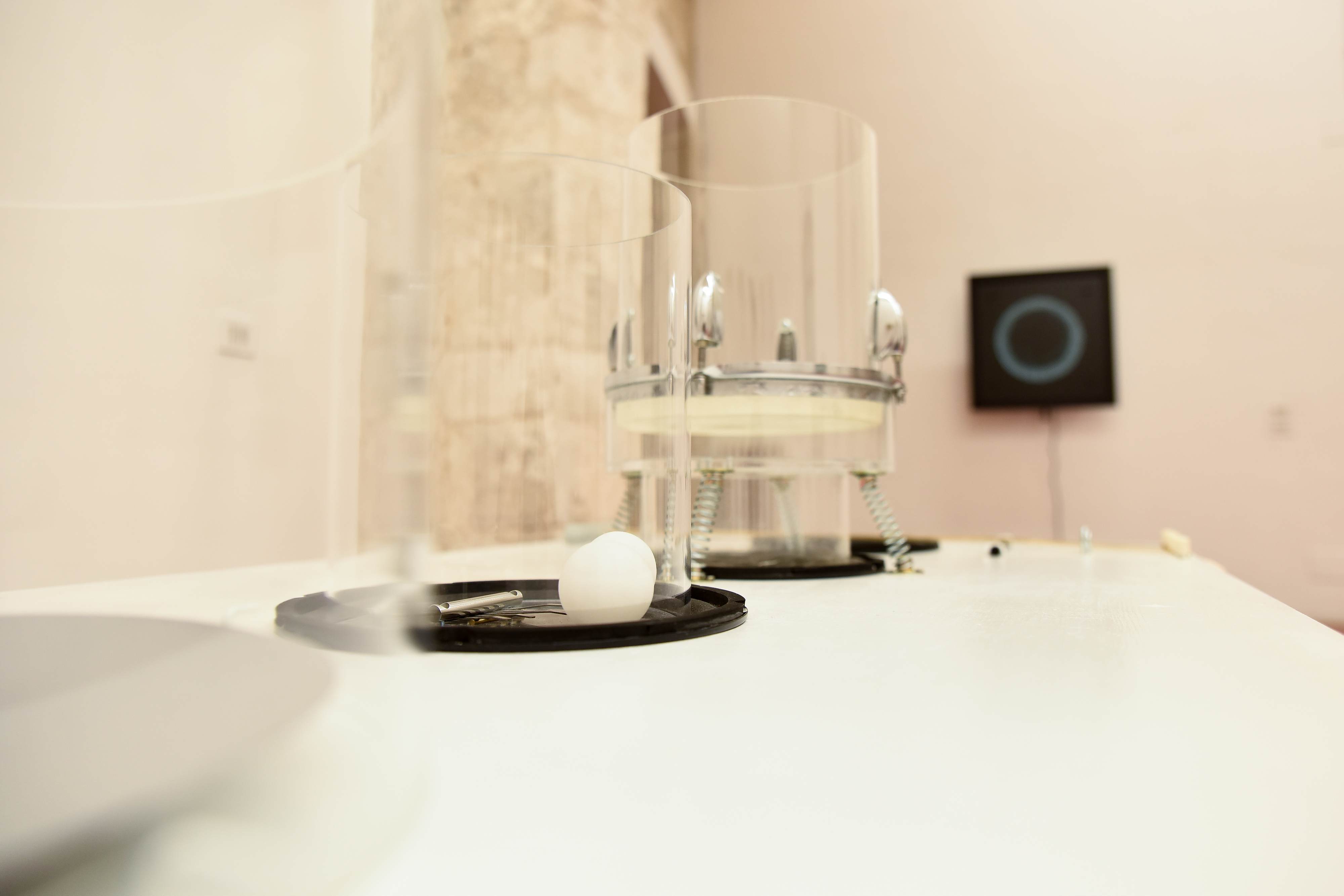
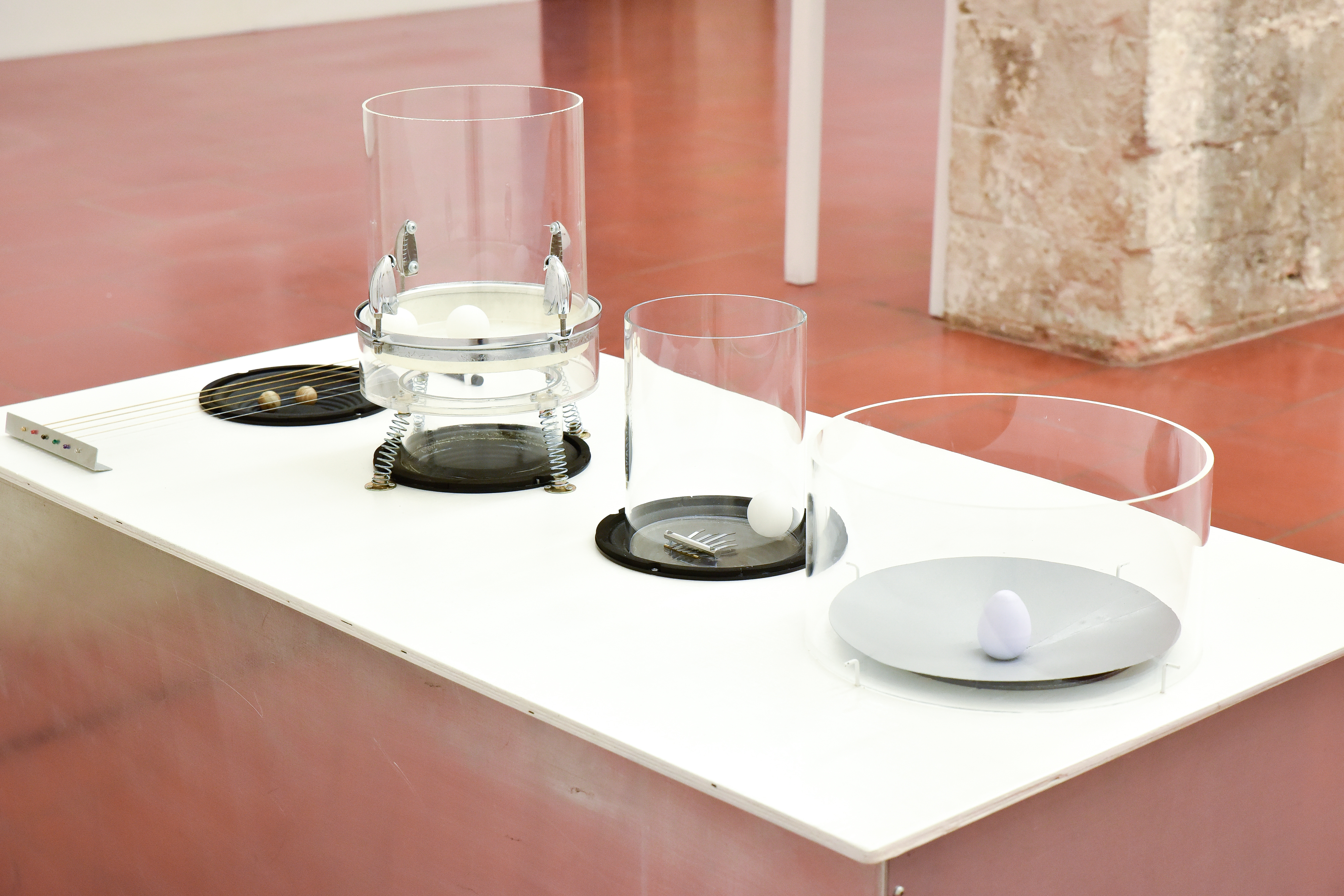
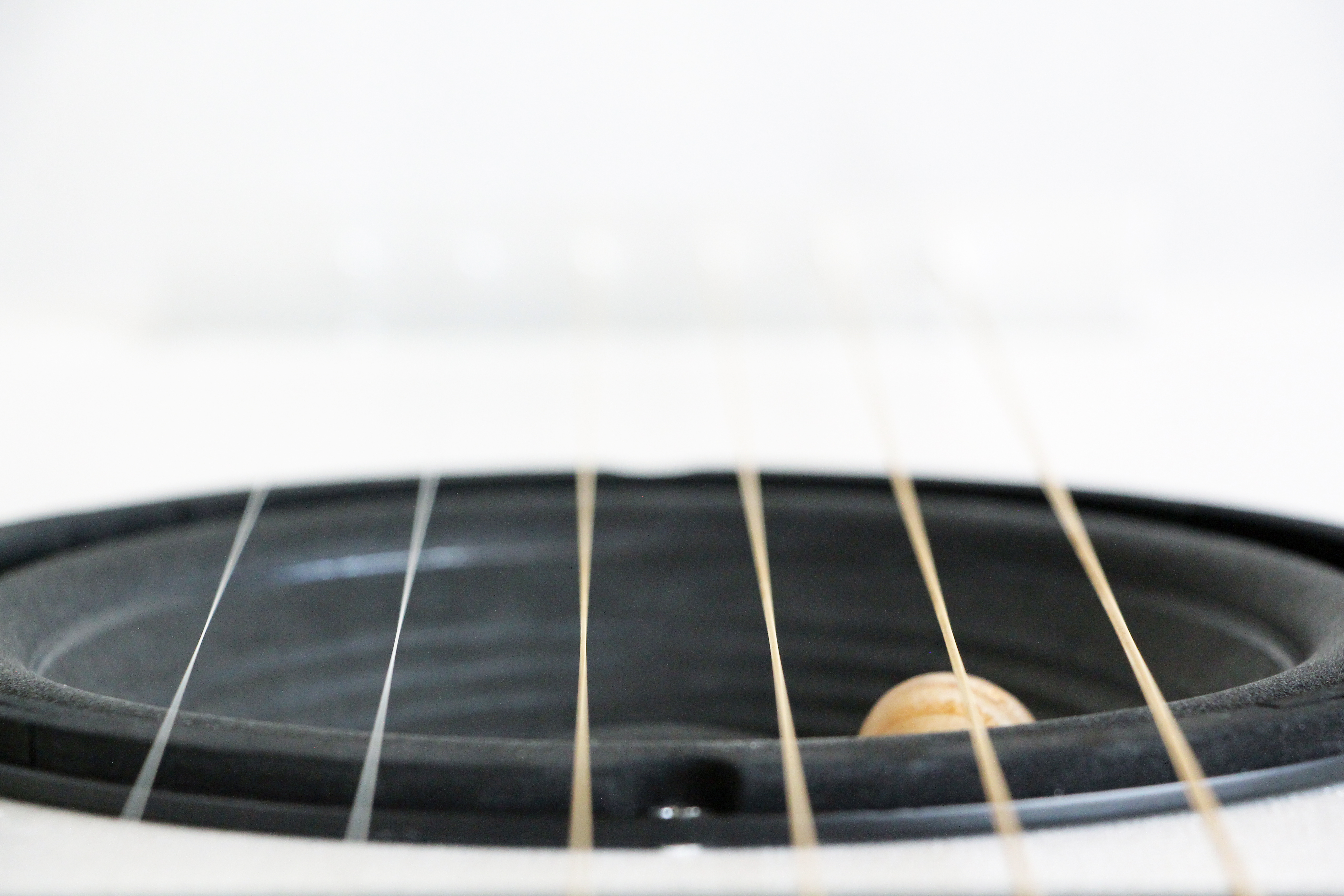
Speakers, amplifier, audio playback system, quadraphonic composition, plexiglass, metal, rubber, wood, modified musical instruments.
Size
200 x 70 x 50 cm
Notes
Modified music instruments, kinetic sculpture, sound installation and automatism based on noise pollution.

In this work, noise is never waste, but raw material — a signal that passes through bodies, ecosystems, the air itself, intercepted and returned as sonic object, sculpture, engraving, score. Interferences Quartet extends a research that has already translated ambient noise into grooves cut on copper plates, or hydroacoustic signals into flows of points suspended in three-dimensional space. Here the focus shifts toward the acoustic pollution generated by the infrastructures of technological progress, airports, industrial plants, and above all wind farms.
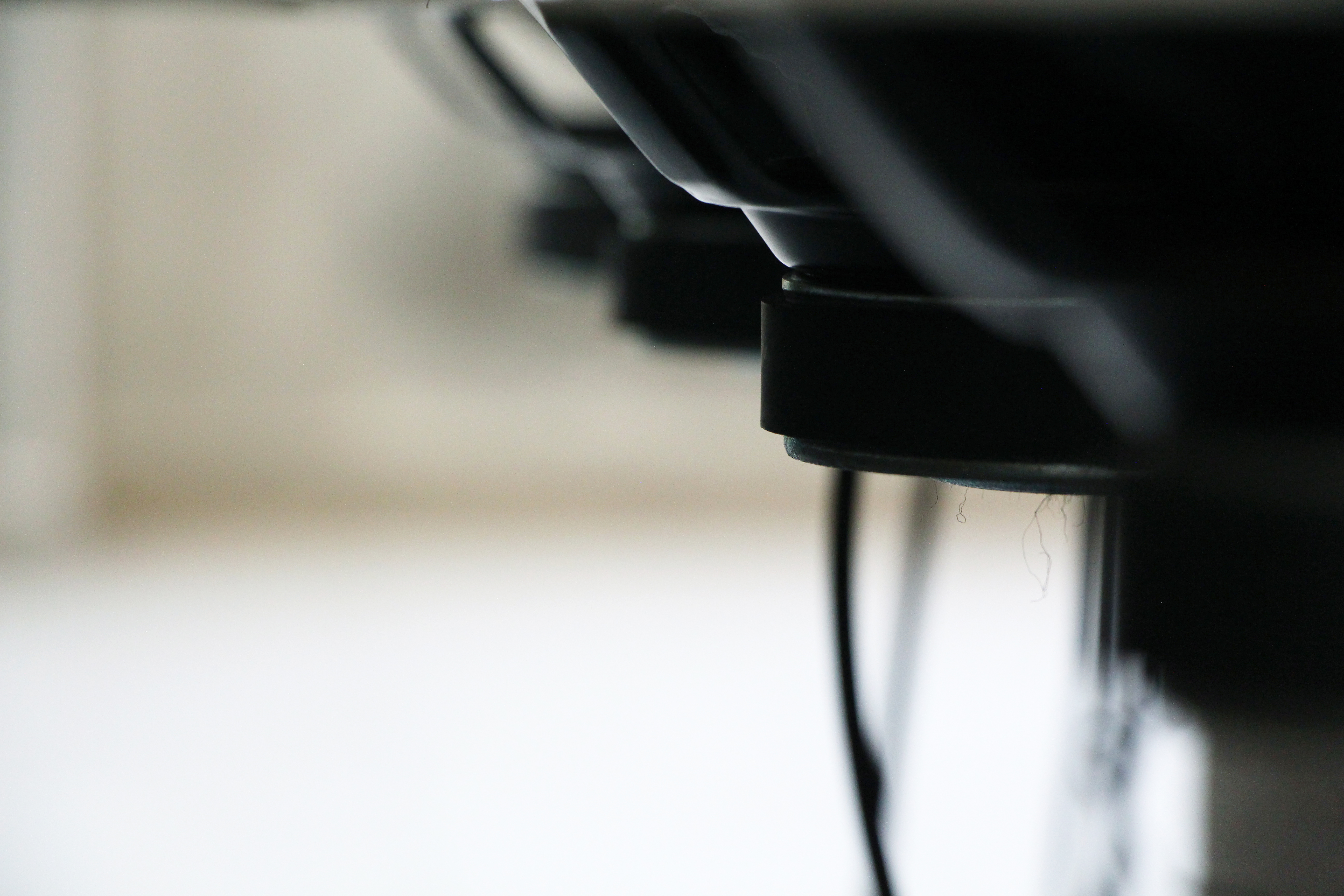
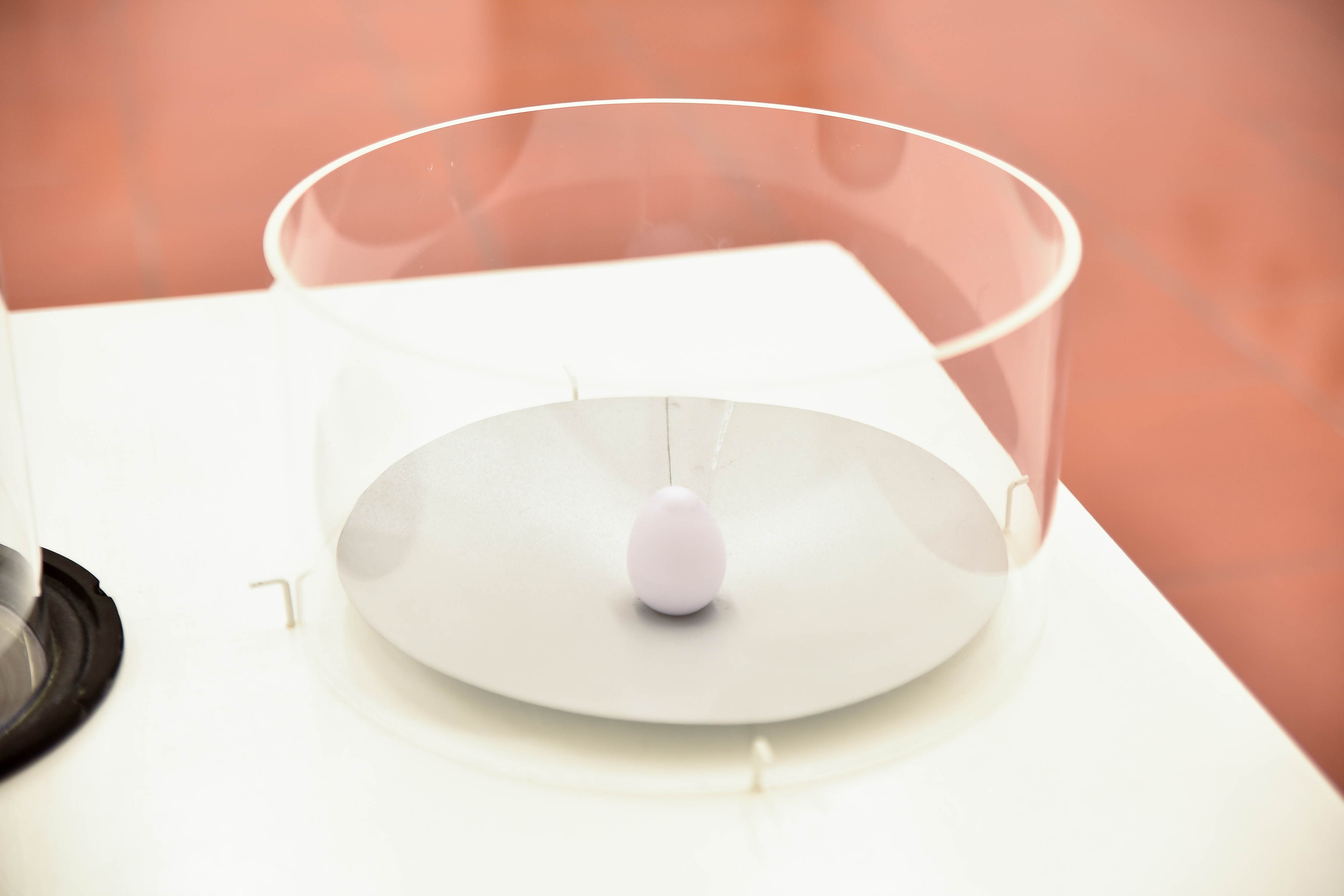
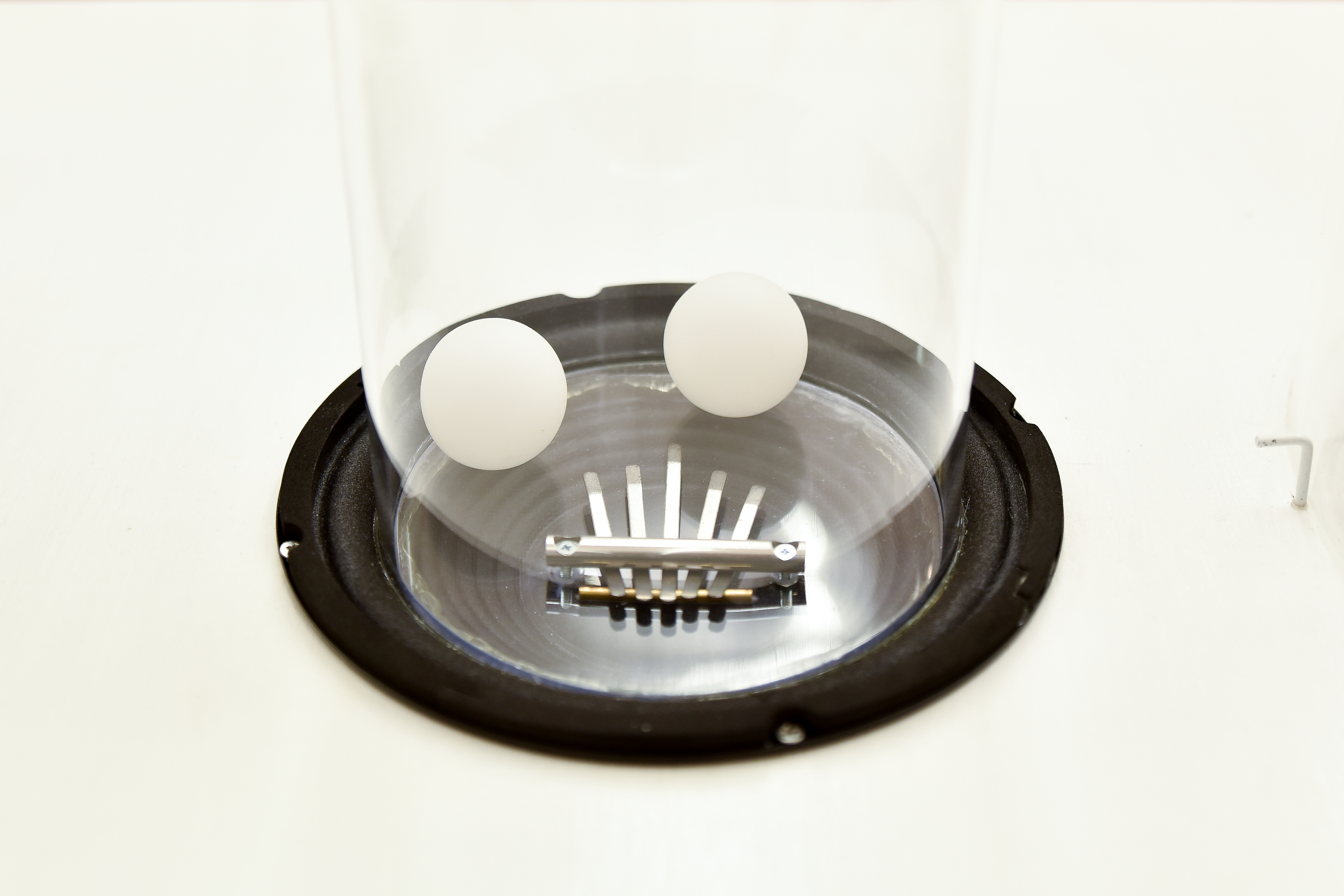
The starting point is a scientific finding. The study "Rumore e vibrazioni," carried out by Arpa FVG, measured the health effects of prolonged exposure to infrasound, identifying a constant intensity peak at 12.5 Hz within a range of 10 to 16 Hz, a frequency felt by the body more than heard by the ear, suspended on the threshold of audibility and doubly insidious for that reason. This data is reintroduced into the compositional process not as abstract information but as a driving force — the infrasonic frequencies mechanically set loudspeakers into vibration, their pneumatic motion, cones pulsing, oscillating, colliding with the air beyond the threshold of listening, producing complex rhythmic patterns. The technological device becomes a poetic instrument, a critical machine reactivating what should remain imperceptible, converting a source of environmental distress into a generative system of musical writing.
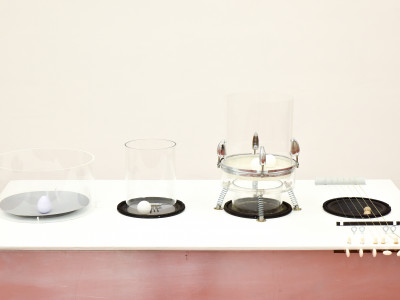
The result is an anomalous quartet, its performers not musicians but loudspeakers turned into vibrating bodies, its score not written but induced, emerging from the interference itself between a harmful frequency and a sonic form. Interferences Quartet amplifies what the ear cannot grasp and returns it into circulation as aesthetic experience, staging the fragile, reciprocal relation between human, machine, and nature, where the noise produced by technological anthropocene is re-listened to, reorganized, and given back as form.